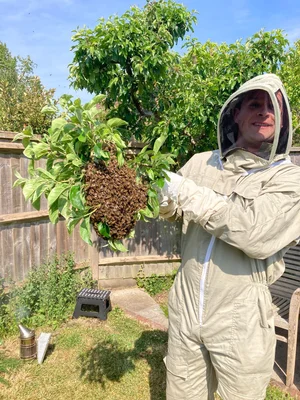
Beekeeping in drought season
Bees in the UK are increasingly vulnerable to drought as hotter, drier summers reduce the availability and nutritional value of nectar and pollen, disrupt flowering periods and shrink the pools and puddles bees use for water; this combination weakens colonies, reduces reproductive success and makes bees more susceptible to pests and disease. To help, gardeners, farmers and local councils can plant a continuous, diverse sequence of native and pollinator-friendly flowers (including drought-tolerant species such as lavender, thyme and scabious), provide shallow water sources with landing stones, leave areas of long grass and wildflower margins, avoid mowing verges during peak flowering, reduce pesticide use and support hedgerow and orchard restoration.
For larger-scale resilience, policy measures that encourage sustainable water management, agroecological farming practices and habitat corridors between floral resources are important. Other pollinators — hoverflies, solitary wasps, butterflies and moths — face similar pressures from reduced nectar supply and habitat loss and benefit from the same measures: diverse planting, pesticide reduction and retention of natural features like bare ground and dead wood.
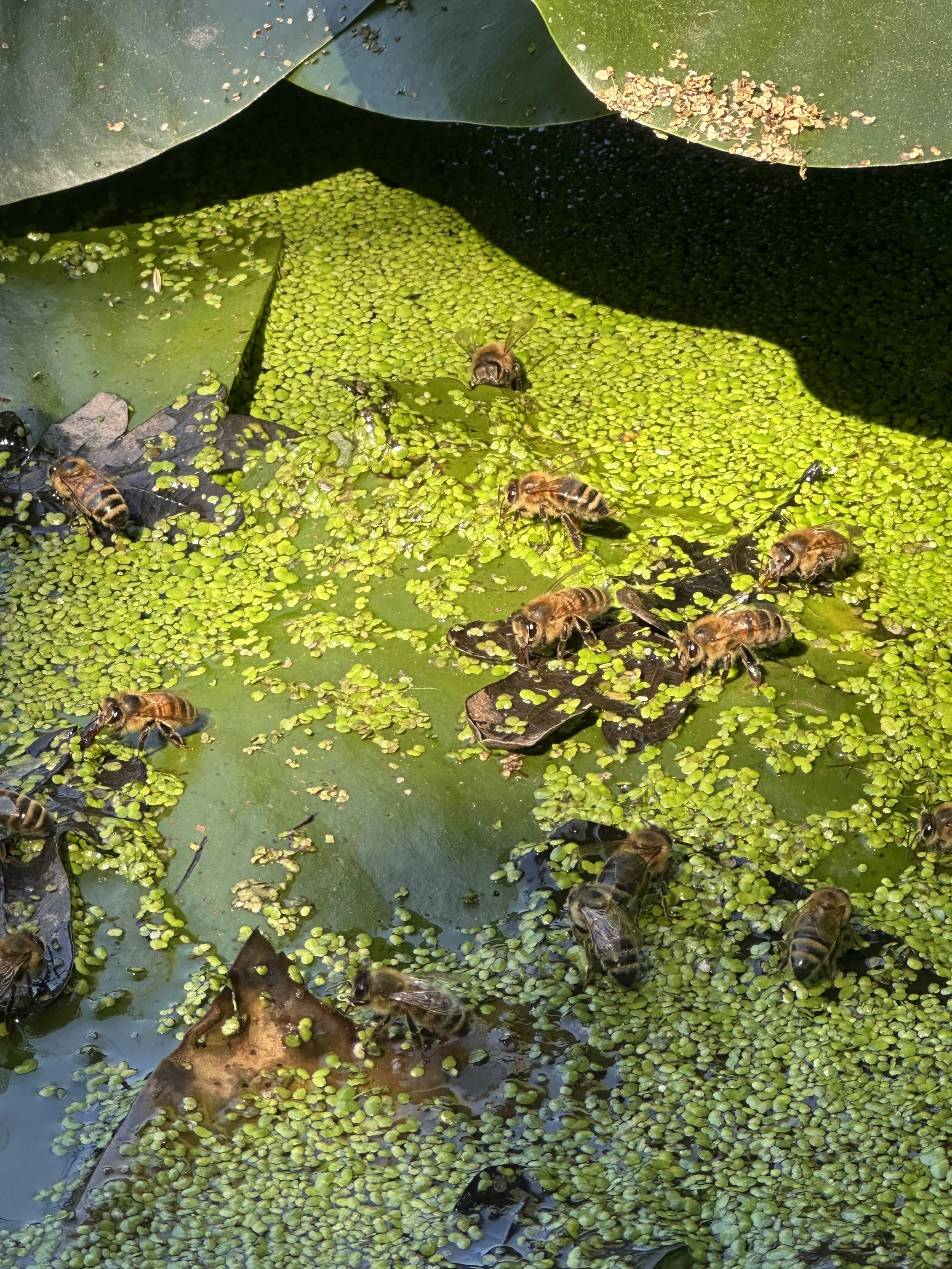
Several worker bees sitting on foliage in the pond to drink and cool themselves. Tiny feet balance on wet stones and the rim of half-submerged leaves, antennae twitching to sample the air. Some sip from the surface film, others scoop droplets with coordinated precision. Occasionally a bee dips deeper, its body brushing the water and leaving concentric ripples that falter as another insect arrives.
Sunlight catches the bees’ amber bands, making them gleam against the dark pool. A faint hum rises and falls—a collective murmur of thirst met and business resumed. Once refreshed, the workers take off in quick, decisive bursts, trajectories aimed back to the hives where cool, moist loads will be spread and temperature tended, life at the apiary maintained in small, exacting acts.